Harnessing AI for Enhanced SEO Strategies
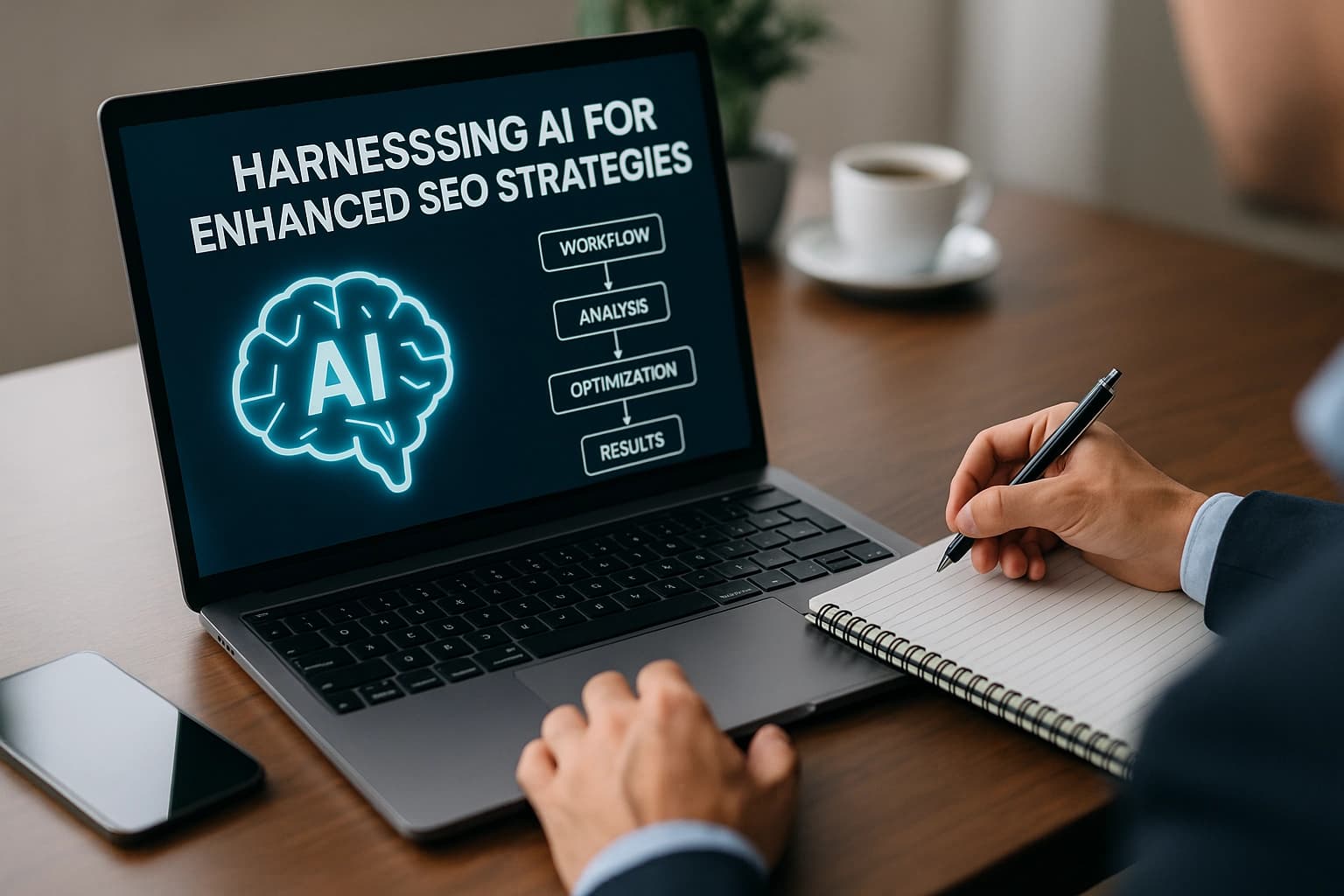
SEO is no longer a game of guesswork; it is a data discipline powered by AI. As algorithms evolve and user intent fragments across formats, strategies that once moved the needle can stall. The next competitive edge comes from ai-driven seo strategies that blend machine intelligence with human judgment, turning noisy search data into clear, testable decisions.
In this analysis, you will learn how to use AI to sharpen every stage of your workflow. We will examine methods for opportunity discovery, including entity-based keyword clustering and intent mapping. We will cover on-page optimization with language models for brief creation, outline validation, and content gap analysis. You will see how AI can accelerate technical audits, from log file insights to internal linking pattern detection. We will also address quality control, human-in-the-loop review, prompt design, and the risks of automation without robust evaluation.
By the end, you will have a practical framework to prioritize initiatives, select tools that fit your stack, define KPIs, and build repeatable processes that compound results, not just one-off wins.
AI-Powered Keyword Research Advancements
Automating keyword ideation and selection
AI compresses weeks of manual research into minutes. Tools such as Semrush, Ahrefs, Moz Pro, Ubersuggest, and Soovle mine query logs, autocomplete sources, and competitor pages to surface topics with demand, difficulty, and intent signals. The Semrush Keyword Magic Tool expands seed terms into long-tail clusters with volume and difficulty, while Ahrefs and Moz add click metrics and SERP behavior, as profiled in this review of top AI keyword research tools. A practical workflow is to set intent filters, align difficulty to your domain authority, validate cross-channel interest on Google, YouTube, and Amazon, then export prioritized clusters straight into the content calendar. With more than 30 AI SEO tools available, choice is no longer the bottleneck, orchestration is.
How AI enhances traditional strategies
Traditional keyword lists missed context. AI-driven SEO strategies use embeddings to cluster semantically related queries, then map those clusters to search intent and funnel stage. This supports cohesive topical hubs, smarter internal linking, and fewer cannibalized pages, benefits repeatedly noted in industry analyses. Improve selection by weighting difficulty with SERP features, for example, prioritize terms where video, FAQs, or shopping carousels create format advantages, and by estimating traffic potential with predicted click curves. Pair this with real-time analytics that flag underperforming pages so you can refresh titles, headers, and internal links before rankings slide.
Predicting and adapting to trend shifts
Machine learning models spot anomalies in impressions, CTR, and query mix, alerting you to shifts before rankings fully move. Forecasts blend historical seasonality with social chatter and AI search surfaces, for example, AI Overviews and chat results, so you can publish early and win citations. With ad spend in AI-driven search projected to surge in the next few years, proactive visibility becomes a moat. Case studies report four-thousand-plus percent traffic lifts when teams operationalize these predictions, and platforms like Opinly, used by 15,000 plus marketers and brands such as Bosch and Gymshark, automate the handoff from insight to execution.
Content Creation and Optimization with AI
Opinly’s role in AI-driven content optimization
Opinly functions like a 24/7 SEO team, turning strategy into execution at scale. The platform auto-generates topic briefs from real search data, drafts outlines and first-pass copy, and enriches pages with entity coverage, FAQs, and schema to improve topical authority. It recommends internal links that strengthen crawl paths and semantic clusters, a known AI win for crawlability and relevance. Opinly then monitors performance with predictive alerts and fixes technical issues before they snowball, aligning with the shift toward real-time analytics. With 15,000+ marketers and brands onboard, including Bosch and Gymshark, Opinly operationalizes AI-driven SEO so teams ship more high-quality content with less manual effort.
Aligning content to AI-derived user intent
Modern search is intent led. AI models classify queries by intent, then reward content that satisfies the user’s task, not just keyword presence. Map each target query to intent categories, informational, navigational, transactional, or commercial investigation, and match formats accordingly. Think solution explainers, feature comparisons, or buying guides, supported by comprehensive entity coverage and clear next steps. For deeper guidance on how AI reframes SEO around intent and semantics, see the role of AI in SEO and how AI decodes user intent. Opinly applies these insights by clustering keywords, proposing content angles by intent, and validating drafts against SERP patterns to lift task completion signals.
Creating SEO-friendly content efficiently with AI
An efficient AI workflow compresses weeks of production into days. Start with AI topic modeling to identify gaps, then generate briefs that specify entities, headings, questions, and internal link targets. Use optimization tools such as MarketMuse or Clearscope for coverage scoring, then pair AI-generated drafts with expert review to meet E-E-A-T and brand voice standards. Automate meta tags, FAQs, and internal links, and set performance guardrails, content scores, entity thresholds, and link density. Case studies report up to 4162 percent traffic growth in under a year, and with 30 plus AI SEO tools available, the stack is mature. For a playbook on AI-powered execution, review these AI SEO strategies for 2025.
Navigating Google's Helpful Content System with AI
Adapting to Helpful Content updates with AI
Google’s Helpful Content System rewards people-first pages, and AI helps teams react before rankings slip. Real-time monitoring flags volatility by model-driven baselines, then recommends fixes such as consolidating thin pages, improving mobile performance, or revising intent mismatch. Tools that track updates provide impact analysis and prioritized actions, a pattern highlighted in how SEO AI helps adapt to Google algorithm changes. AI also accelerates keyword shifts, surfacing intent-rich long tails and SERP features to target as guidance changes, using AI to stay ahead of Google’s algorithm updates. In practice, configure anomaly alerts, schedule weekly content rescoring, and run continuous technical audits so broken links, crawl traps, and template issues are resolved before quality classifiers downrank your site.
Elevating quality and relevance at scale
AI-driven SEO strategies improve E-E-A-T signals and topical authority, which the Helpful Content System increasingly relies on. Entity extraction maps each article to people, products, and concepts, then aligns coverage with search intent and user tasks, not just keywords. Content optimizers score readability, depth, and evidence, prompting author credentials, first-hand perspectives, and structured answers that win snippets. Case studies report outsized gains when content and technical quality move in lockstep, including 4162 percent traffic growth in under a year. Opinly operationalizes this by auto-enriching schema, recommending citations, and aligning drafts with intent profiles derived from live query data.
Maintaining thematic consistency across the site
Consistency signals trust, helps crawling, and reduces cannibalization. AI clusters pages into coherent topic groups, enforces boundaries between near-duplicate intents, and automates internal links to reinforce themes, a best practice echoed by enterprise SEO teams. RAG style knowledge bases keep tone and facts consistent across briefs and updates, while AI dashboards expose gaps and decay by cluster. Opinly builds and refreshes clusters, generates hub pages, and recalibrates links based on engagement and conversions. Start by defining three to five pillars, map supporting content with entity coverage targets, then let AI score cohesion and propose merges or rewrites.
AI's Role in Streamlined Link Building
Automating validation and competitor mapping
AI now handles the heavy lift of backlink validation and competitor mapping, compressing days of manual checks into minutes. Models score prospects by topical relevance, authority, and risk, then verify live status codes, indexation, and anchor diversity at scale. Tools that apply machine learning to link graphs surface shared domains across rivals and expose velocity trends, revealing where competitors are accelerating or stalling. For example, AI analysis of competitor backlink profiles can uncover common referrers and content formats that consistently earn links, informing precise replication strategies. Teams report up to a 44 percent reduction in time spent on competitive analysis, while real-time anomaly detection flags lost or toxic links quickly so recovery actions are not delayed.
AI-optimized outreach at scale
Outreach benefits from AI-driven SEO strategies that prioritize quality over volume. NLP models cluster publishers by niche, audience overlap, and historical acceptance rates, then score the probability of placement before a single email is sent. Generative systems draft personalized pitches that cite the editor’s recent articles, align with their style, and propose data-backed angles, raising reply and placement rates. SalesHive documents how AI helps focus on high-affinity, niche-relevant domains rather than mass blasts, supporting higher domain authority gains, see AI tools and 2025 best practices. At scale, these workflows enable 60 to 65 percent more campaigns to be managed simultaneously, while automated follow-ups and sentiment analysis improve throughput without sacrificing relevance.
How Opinly systematizes link building
Opinly brings these pieces together, acting like a 24/7 SEO team for 15,000+ marketers and brands such as Bosch and Gymshark. Within one hub, users can set acceptance criteria, for example topical fit, minimum authority, and index status, then let Opinly validate prospects and monitor live links against those rules. The platform’s outreach engine can generate pitch variants, schedule sends, and track replies, while performance dashboards attribute lifts to specific referring domains and anchors. Practically, teams can define monthly anchor ratio targets, receive alerts on lost high-value links, and auto-build competitor gap lists that prioritize the easiest wins. The result is consistent link acquisition, cleaner profiles, and faster feedback loops, creating durable compounding gains that feed every downstream SEO initiative.
Adaptation to Conversational Searches
Understanding AI’s role in changing search habits
Search is becoming conversational because AI now interprets natural language at scale. Voice search adoption in the U.S. is projected to hit 153.5 million users in 2025, a 2.5 percent rise year over year, signaling a steady shift from typed keywords to spoken questions and follow-ups, see AI-powered SEO strategies for 2025. Google’s BERT and MUM systems deepen this shift by modeling context, entities, and intent across multi-turn queries, which rewards pages that answer how people speak rather than how they type, see BERT and MUM emphasis on intent. For teams already using ai-driven SEO strategies, this means rethinking query models from “head term” lists to intent clusters like who, how, near me, and follow-on clarifications. It also means measuring performance beyond rankings, for example tracking impression share for question formats and featured snippet occupancy, since AI surfaces direct answers more frequently.
Optimizing for natural, voice-triggered queries
Prioritize conversational phrasing, question-led subheads, and concise answers within the first 40 to 60 words, then expand for depth; this improves eligibility for rich results and voice responses, see how to optimize content for AI-driven search. Use long-tail, semantic variations of user questions, for example “What is the best CRM for a startup under 50 dollars per month,” not just “best startup CRM.” Mark up FAQs, HowTo steps, products, and local data with structured schema so assistants and SERP features can reliably extract answers. Optimize for proximity queries by aligning NAP data, landing page copy, and internal links with “near me,” “open now,” and “cost” intents. Finally, test content with assistants and look for paraphrase robustness, can your answer still win if the question is reworded.
Expert views and predictive adaptation
Experts increasingly view AI as a forecasting engine for search behavior, not just an optimizer. Predictive models can mine query logs, SERP features, and seasonality to anticipate rising question formats, enabling content to be produced before demand spikes. Case studies show what is possible when prediction guides content roadmaps, with AI-led programs reporting up to 4162 percent traffic growth in under a year. Opinly operationalizes this approach by detecting conversational intents, generating Q&A content blocks, adding schema automatically, and alerting teams when “how” or “can I” queries accelerate. With real-time analytics, trend alerts, and automated internal linking to surface answers, you can stay ahead as voice and chat-first behaviors expand. Next, apply the same predictive lens to technical signals so pages are not only relevant but fast and crawler-friendly.
Implications of AI-Driven SEO Transformations
Impact on traditional SEO and marketing
AI is reshaping traditional SEO and marketing from periodic, manual tasks to always-on, predictive programs. Salesforce and ResearchFDI highlight automation across keyword discovery, content optimization, and trend forecasting. Internal linking improves as algorithms map topical clusters and crawl paths, lifting crawl efficiency and relevance. Real-time dashboards and alerts shorten feedback loops, letting teams fix technical or content issues fast. Case studies show step-change outcomes, including a 4,162 percent traffic surge, while platforms like Opinly extend gains across content, fixes, backlinks, and tracking for 15,000 plus marketers.
Adaptation challenges and opportunities
Integration comes with challenges that require governance, training, and process redesign. AI can surface plausible but wrong facts, so enforce human review, citations, and data QA gates to protect credibility. Ethical and brand standards matter, especially with large-scale generation, so document usage policies and watermarking practices. Search behavior is changing as answer engines and generative results reduce clicks, making Answer Engine Optimization and Generative Engine Optimization essential. Practical moves include unifying first party data, maintaining a prompt library, pairing automated internal linking with editorial oversight, and using Opinly to triage issues through automated scoring.
Future predictions for the SEO landscape
Looking ahead, ai-driven seo strategies will increasingly optimize for multimodal search, where text, voice, image, and video queries converge. Expect more direct answers and richer snippets, so entities, structured data, and concise, verifiable copy become decisive. Predictive analytics will guide content calendars and technical sprints, aided by automated alerts that flag ranking risk in real time. Success metrics will shift toward share of answers, intent coverage, and velocity from discovery to publication, not sessions. Teams that combine model driven insights with human judgment, and instrument workflows through platforms like Opinly, will compound advantages as algorithms evolve over time and budget.
Strategic Takeaways on AI SEO Integration
Operationalizing AI SEO with Opinly
Integrating an AI stack is no longer optional for sustainable growth; it is the operating system of modern SEO. Research from Salesforce and others shows AI now automates keyword discovery, content optimization, and trend prediction, compressing weeks of work into hours. Opinly centralizes these capabilities, functioning like a 24/7 SEO team that generates briefs, fixes technical issues, scales internal linking, and tracks performance for 15,000+ marketers, including Bosch and Gymshark. Case studies such as Xponent21’s reported 4162 percent organic traffic growth in under a year illustrate how ai-driven seo strategies can unlock outsized gains when execution is continuous and data led. Prioritize workflows that AI improves most, for example internal linking to boost crawlability and topical depth, predictive anomaly alerts to catch ranking volatility, and automated backlink analysis to focus on high-impact prospects. Establish weekly KPIs in an AI-powered dashboard, then iterate on briefs, links, and technical fixes based on real-time insights.
Preparing for Voice and Continuous Adaptation
Search is rapidly shifting to conversational and voice-led experiences, which rewards content that mirrors natural language and directly answers intent-rich queries. Align pages to voice by adding concise Q&A sections, using FAQ and HowTo schema, and optimizing for local and “near me” contexts where applicable. Improve speed and accessibility, since voice and assistant surfaces favor fast-loading, structured results. Track proxy signals for voice readiness, for example featured snippet share, People Also Ask placements, and long-tail CTR, supported by AI dashboards that offer predictive insights and automated alerts. Build a culture of continuous learning, maintain a prompt and template library, run quarterly audits on content quality signals, and A/B test on-page patterns against evolving SERP features. Treat Opinly as the command center that operationalizes these cycles, ensuring your team adapts as algorithms and user behaviors shift.
Conclusion
AI moves SEO from guesswork to a rigorous, testable workflow. Use entity-based clustering and intent mapping to find opportunities. Apply language models to speed briefs, validate outlines, and close content gaps. Accelerate technical audits with log insights and internal link pattern detection, then protect quality with human review, sound prompts, and clear evaluation metrics.
Your next step is a 30 day pilot. Select one topic cluster, map intents, generate briefs, instrument measurements, and ship. Review results weekly, refine prompts, and scale what wins.
This framework helps you prioritize initiatives that drive measurable impact, not busywork. Start today, pair machine precision with expert judgment, and turn noisy search data into compounding advantage.
Frequently asked questions
What role does AI play in modern SEO strategies?
AI revolutionizes SEO by streamlining processes such as keyword discovery, optimizing content, and forecasting trends. It enhances traditional methods by clustering semantically related queries and mapping them to search intent, resulting in more cohesive topical hubs and improved crawlability.
How can AI improve keyword research?
AI tools like Semrush and Ahrefs expedite keyword research by analyzing search data to surface topics with demand and identifying long-tail clusters. These tools help align keyword difficulty with domain authority and validate cross-channel interest effectively.
What are the benefits of using AI for content optimization?
Using AI for content optimization allows for efficient brief generation, outline validation, and content gap analysis. AI also enriches content with entity coverage and suggests internal links to enhance topical authority, ensuring faster, high-quality content production.
How does AI help with handling Google algorithm updates?
AI helps anticipate impacts from Google updates by flagging changes in rankings and recommending actions like consolidating thin pages. It accelerates keyword adjustments to align with new search features and assists in maintaining quality to prevent downranking.
What are the implications of voice search on SEO?
As AI interprets natural language better, optimizing for conversational queries becomes crucial. This involves using question-led subheadings and concise answers to improve eligibility for rich results in voice search. AI assists in adapting content for these evolving habits.
Get started with Opinly to put your traffic on auto-pilot
Don't wait for the perfect moment. Start building your SEO and LLM presence today with Opinly.